
The Downside of Expertise
The curse of knowledge and how to fight it

I still remember one of my internships during my undergraduate. I was invited into a meeting with external collaborators, and I was referred to as the expert in X. I was extremely frustrated by that label: if a twentysomething guy who just spent a few months on this topic is the expert, then there is a problem here. Imposter syndrome was surely kicking in.
Nonetheless, I was the relative expert there.
However, it is easy to forget that the knowledge you toiled months to internalize is unfamiliar to your audience. This is a real threat that, in many cases, adds nuance to the outcry about a malicious Reviewer 2.
During my master’s, I received a review, and my first reaction was: how can the reviewer be so silly as not to understand? The shame of realizing it was — at least partially — my own making still humbles me.
That was when I understood1 the curse of knowledge, the poison dripping from the double-edged sword of expertise2.
The room that goes silent because no one can follow. The meeting where you nod without understanding. The paper that gets rejected not because the science is bad, but because the author could not transcend their own expertise.
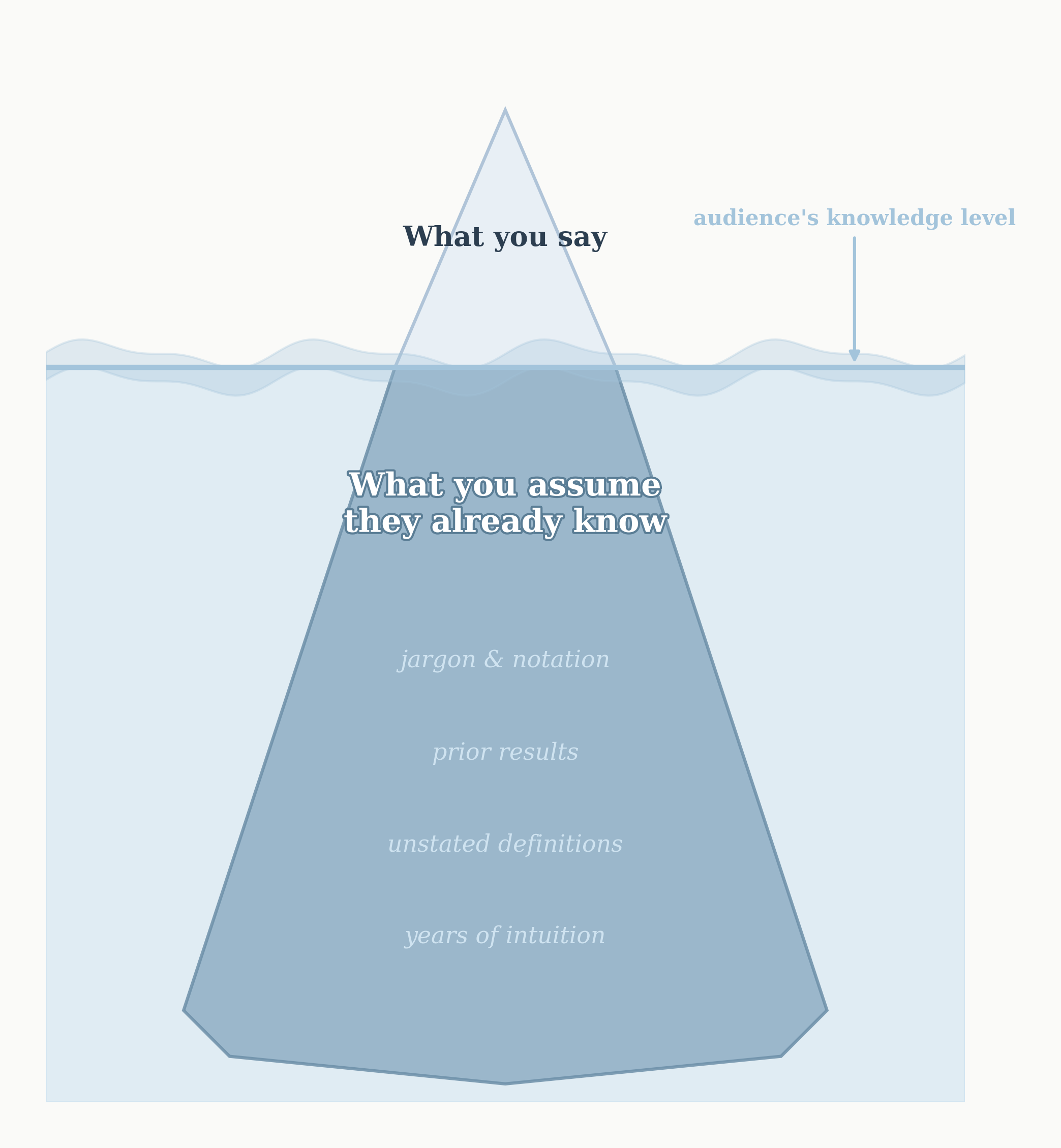
This is not a knowledge problem, but an empathy and communication problem. Assuming knowledge that can only be earned. Remember that you were in the same shoes when you started learning about the topic.
The antidote starts with intellectual humility, i.e., knowing what you don’t know. And, more importantly, imagining—or remembering—what your audience doesn’t know yet3.
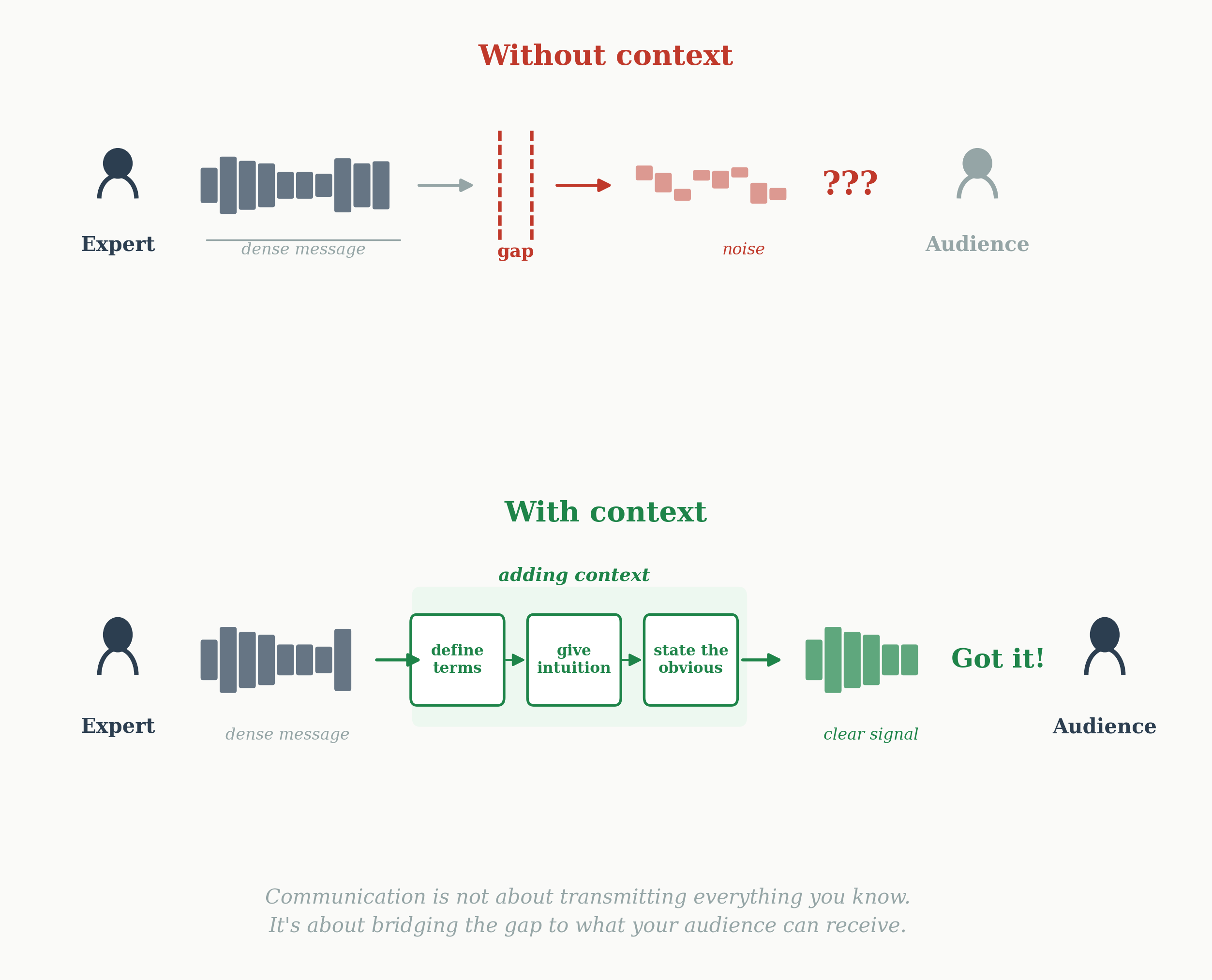
How to fight the curse?
Here are a few guidelines I found useful:
Think with the head of the audience, and consciously remind yourself you were in the same shoes as the novice — even better, ensure there is something in your life where you are a novice (pick up a new hobby, or read a book about an unfamiliar topic).
Say the “trivial” things. If you feel embarrassed to state the obvious, you are doing it right.
Do not assume everyone wants all details. Aim for clarity and simplicity, and layer in the nuance progressively — and acknowledge where you simplify.
Ask your audience to summarize what they understood with their own words.
Next time, watch the experts closely. Not for what they know — but for whether the room can follow. That’s the real test of expertise: making others understand what you know.
Knowing the curse of knowledge also has an unexpected upside: making you a better learner.
Topics can be overwhelming because of missing context and unstated assumptions. Once you see that, you know exactly what to ask — whether of a colleague, a textbook, or an AI prompted with your specific background. The curse, turned inside out, becomes a diagnostic tool.
Thanks to my mentor on that project, Ferenc Vajda, for teaching me this, among many other things. And my to Wieland Brendel for giving meg Steven Pinker’s The Sense of Style in my first PhD year
It still requires ongoing practice to avoid
See also The Intelligence Trap on the topic